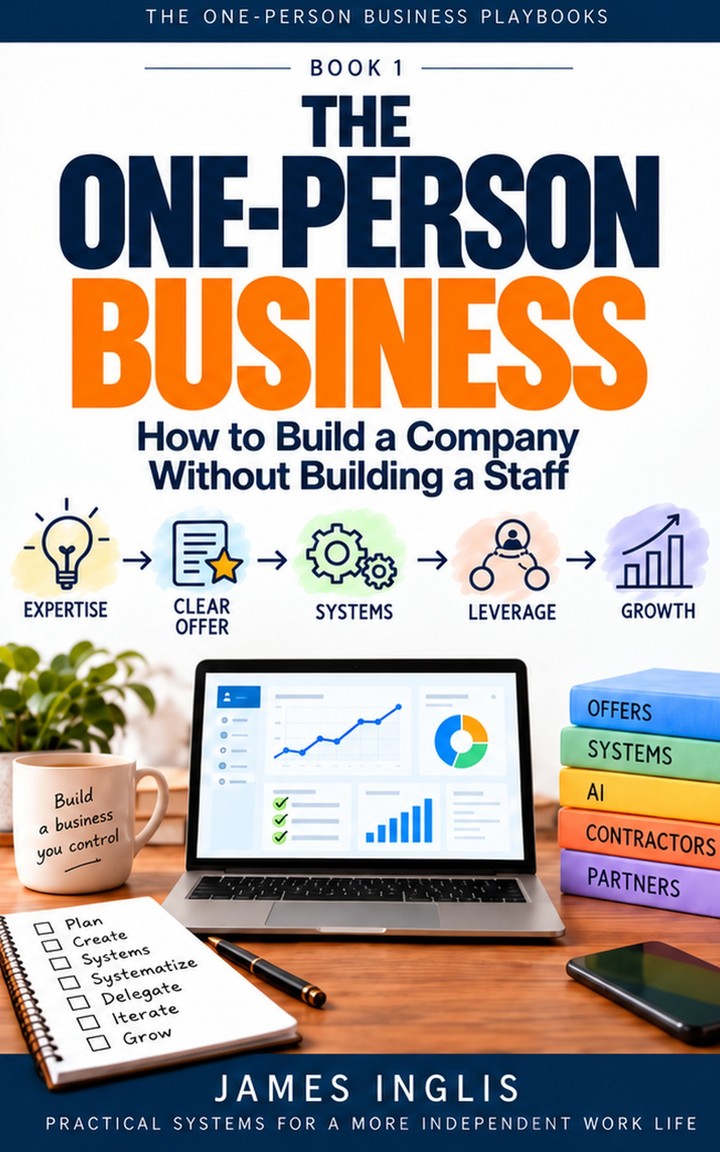
PLAYBOOK 01
The One-Person Business
Design a focused company around expertise, systems, automation, AI, contractors, and leverage.
Open companion toolkit →The One-Person Business Playbooks are practical guides for entrepreneurs who want serious capability without automatically adding employees, overhead, and complexity.
Systems. Automation. AI. Contractors. Distribution. Leverage.
Keep the owner close to judgment and high-value decisions. Redesign everything else for leverage.
Each playbook tackles a specific part of building and running a more capable one-person company.
Design a focused company around expertise, systems, automation, AI, contractors, and leverage.
Open companion toolkit →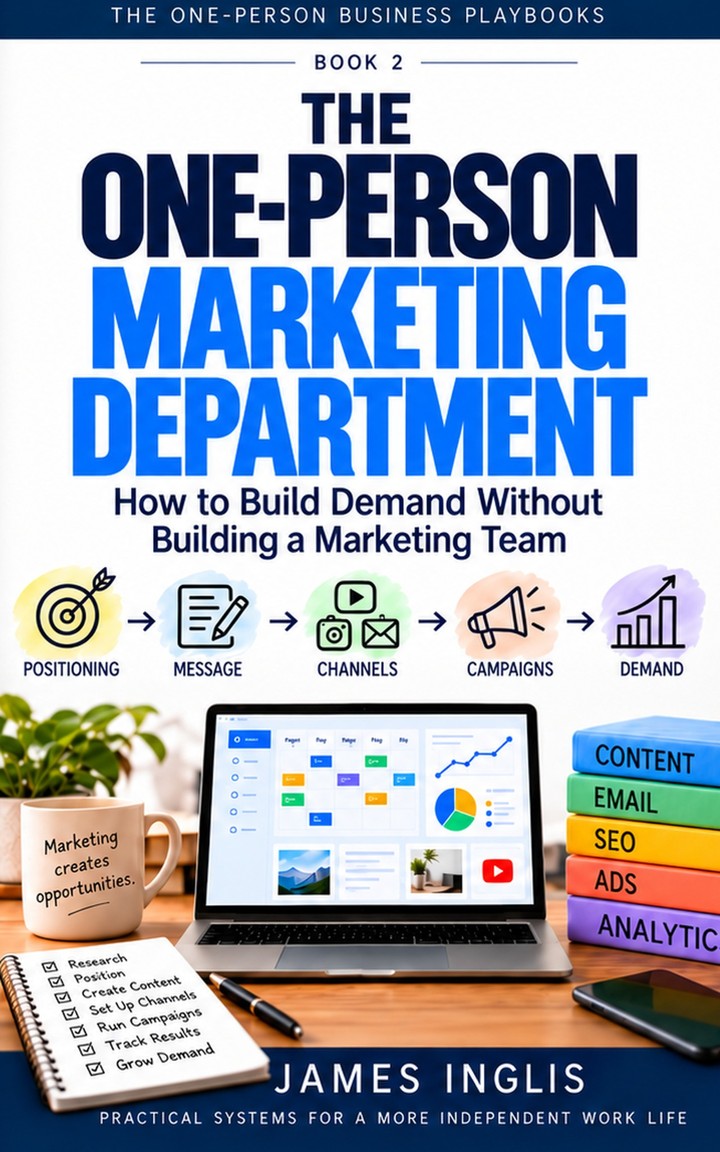
Build a focused marketing engine across positioning, content, channels, campaigns, and measurement.
Open companion toolkit →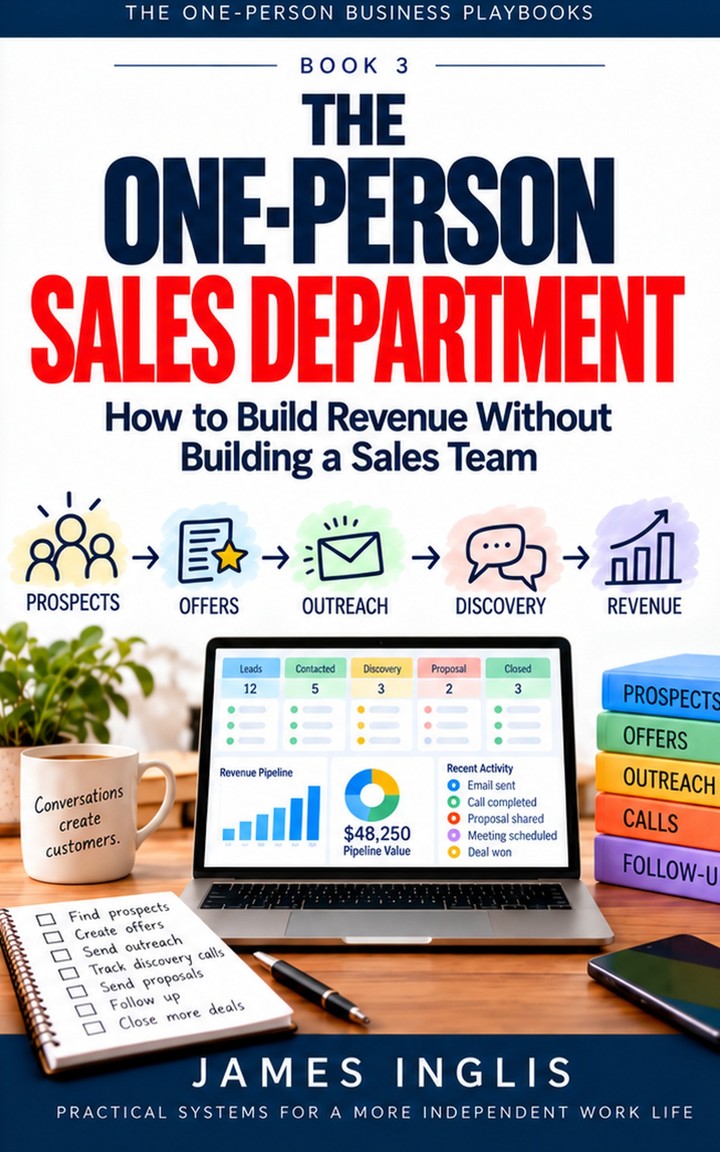
Create a repeatable sales system for targeting, outreach, discovery, proposals, follow-up, and closing.
Open companion toolkit →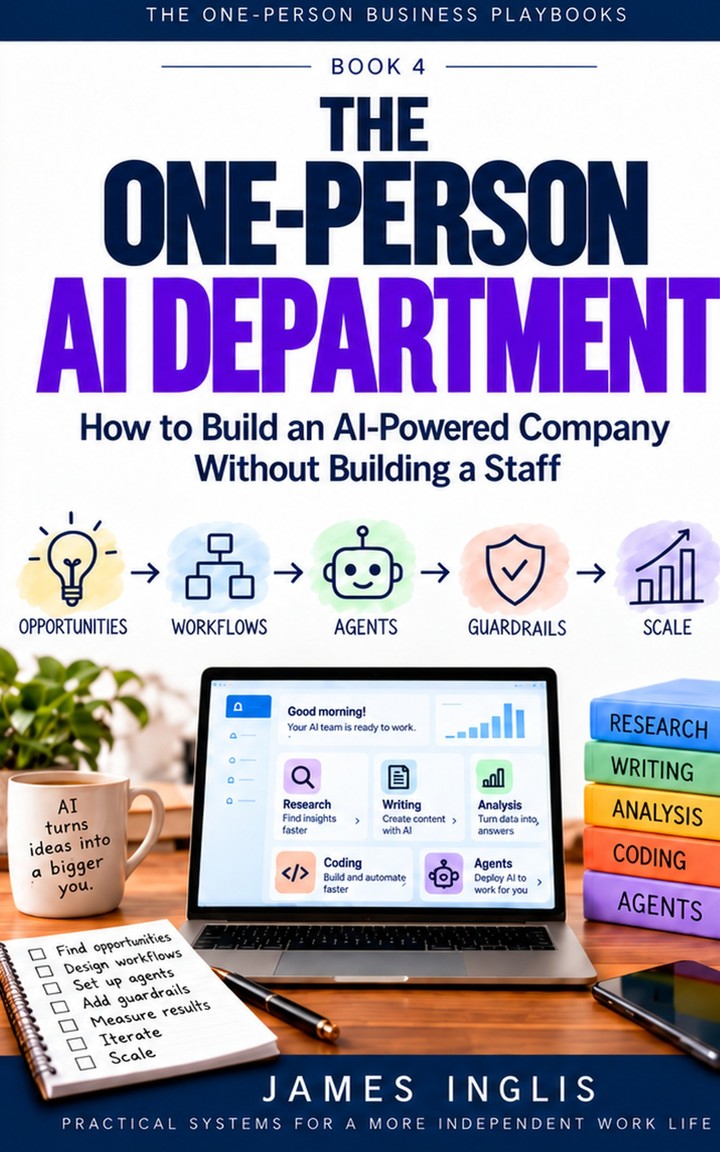
Add AI capability across research, writing, analysis, workflows, agents, automation, and quality control.
Open companion toolkit →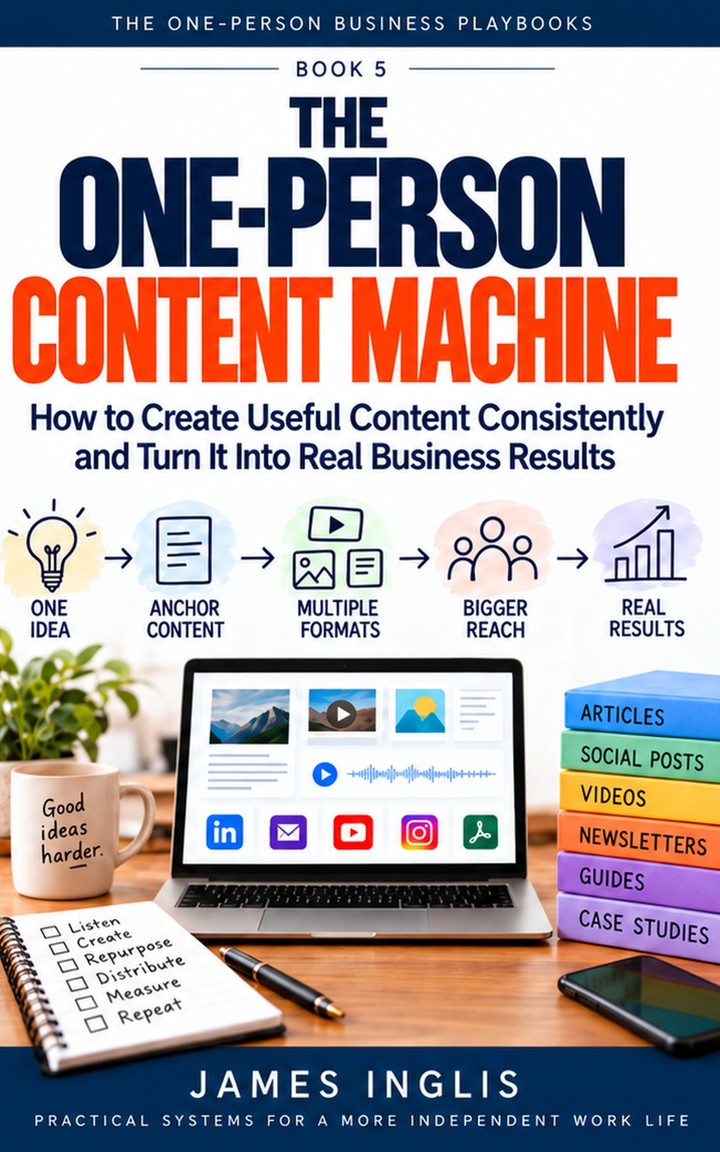
Turn one good idea into anchor content, multiple formats, broader reach, and measurable business results.
Open companion toolkit →
Run the whole business through clear priorities, weekly rhythms, repeatable workflows, automation, financial control, customer systems, capacity, and continuous improvement.
Open companion toolkit →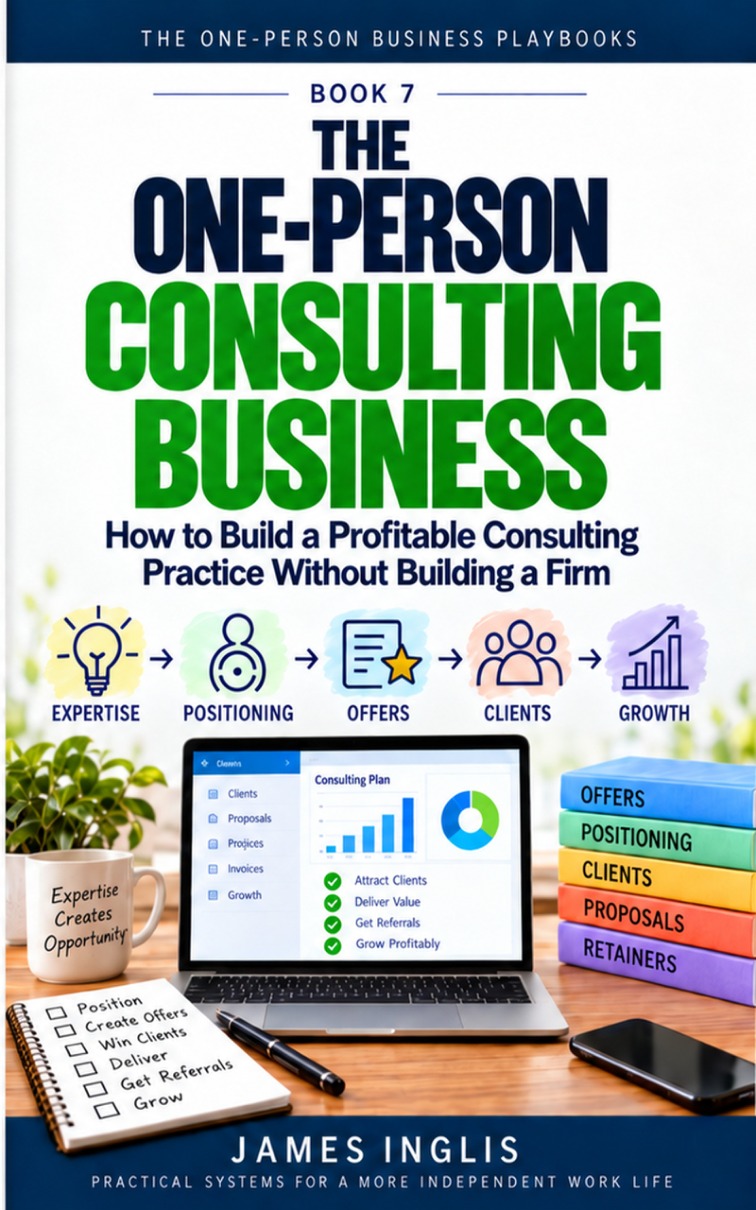
Turn professional expertise into a high-value advisory practice through positioning, offers, better clients, and repeatable delivery.
Explore the book and toolkit →The books can stand alone, but they become more useful when you connect them: build the business, create demand, convert prospects, expand capability with AI, build a repeatable content engine, and run it all through a practical operating system.
The companion toolkits turn the ideas into worksheets, editable templates, dashboards, and operating tools you can use in the business.
Business-model tools, pricing, SOPs, leverage planning, acquisition tools, and the one-person CEO dashboard.
Open toolkit →Positioning, offers, channels, content, email, paid media, AI delegation, automation, and dashboards.
Open toolkit →Customer-fit scoring, target accounts, outreach, discovery, qualification, proposals, CRM, and pipeline tools.
Open toolkit →Opportunity maps, workflow builders, prompts, agents, guardrails, quality checks, and AI operating tools.
Open toolkit →Content audits, customer questions, territory maps, idea generation, repurposing, channels, lead funnels, newsletters, scorecards, and the three-hour weekly system.
Open toolkit →Command center, annual direction, 90-day plan, weekly CEO rhythm, workflows, SOPs, automation, financial pulse, customer lifecycle, capacity, reviews, and the 30-day installation plan.
Open toolkit →24 editable worksheets for positioning, pricing, client development, proposals, delivery, AI workflows, and recurring revenue.
Open toolkit →A one-person company should not mean doing everything yourself. It should mean becoming unusually deliberate about what only you should do — and building systems around the rest.